How Can Therapy Help Blended Families Build Stronger Bonds?
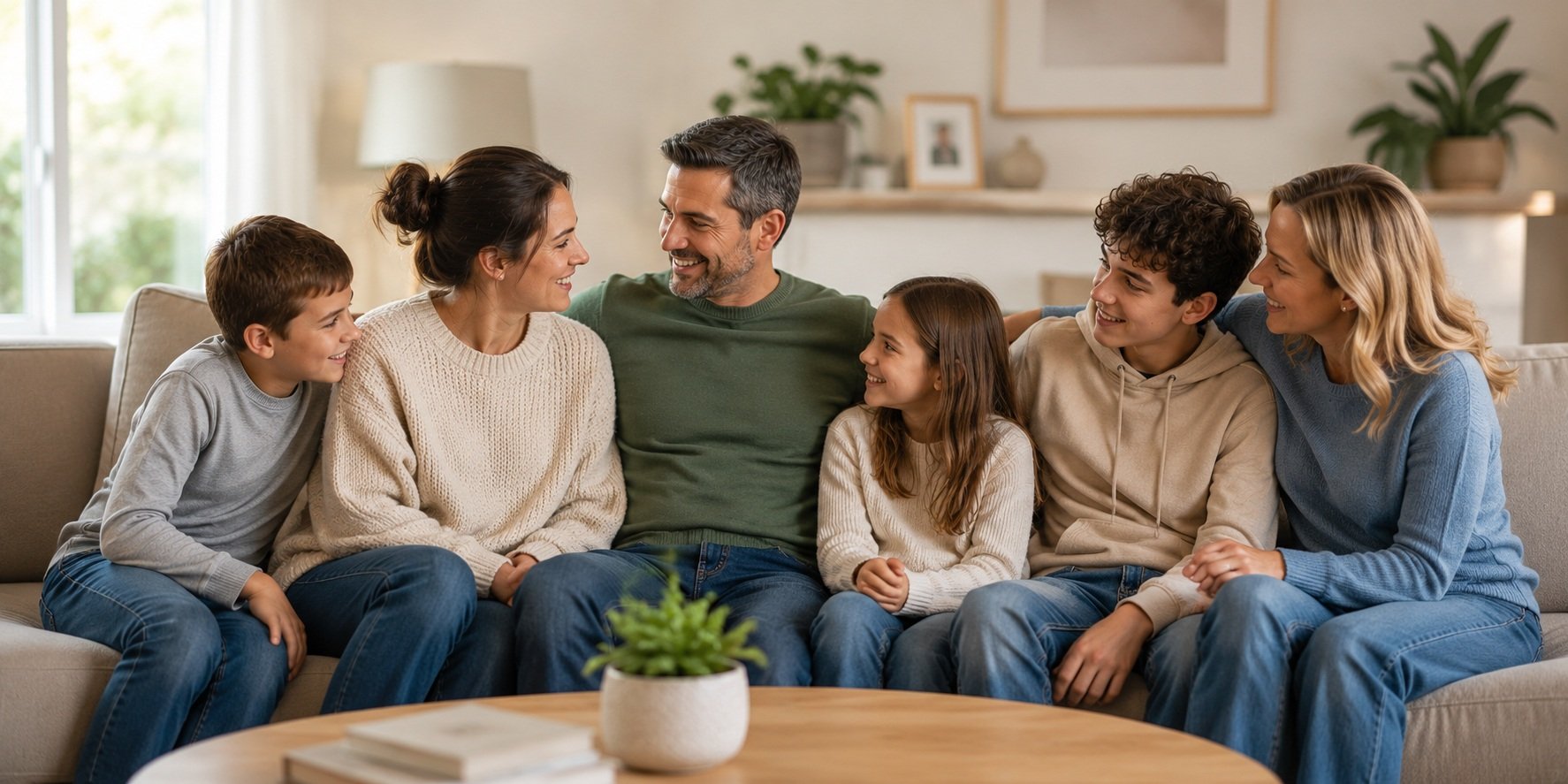
You pictured it going differently. Two families coming together, children who would eventually feel like siblings, and a home that would feel whole and warm. What actually happened was more complicated. The children tolerate each other at best. Your partner's kids resist your authority. Your own children feel pushed aside when their stepparent's children visit. Mealtimes are tense. Holidays are a logistical and emotional minefield. And beneath it all is the exhausting question: is it supposed to be this hard?
The answer, according to research on blended family development, is yes, at least for a while. Blended families face a specific set of structural, relational, and emotional challenges that are genuinely different from those of first-family households and that most families significantly underestimate before they begin. Understanding why blended family adjustment is hard, and knowing what helps it get easier, makes an enormous difference to both outcomes and the capacity to sustain the effort required.
This guide explains the most common challenges of blended family adjustment, what research tells us about how these families work best, and how family therapy Vancouver WA provides the structured support that helps blended families build the bonds that do not come automatically but can develop over time with the right support.
Why Blended Families Are Structurally Different, And Why That Matters
Blended families are not simply two families combined. They are a new family structure with unique characteristics that require new rules, new roles, and new emotional competencies, most of which nobody explains to the adults involved before they step into it.
Stepfamily researcher Patricia Papernow, whose work on blended family development is among the most influential in the field, identified that the most common mistake blended families make is expecting to function like a nuclear family; with the stepparent naturally assuming a full parental role, children accepting new sibling relationships organically, and household unity developing quickly from goodwill and love. This expectation, when it meets the reality of blended family dynamics, produces confusion, hurt, and conflict that couples often interpret as evidence that their particular family cannot work.
Research consistently shows that successful blended family integration typically takes four to seven years, not months. The families who navigate this timeline most successfully are not those with the least conflict or the most compatible personalities. They are those who understand what stage they are in, what the realistic goal of that stage is, and what support helps them move through it without the expectations of premature unity undermining what progress is actually being made.
The Research on Blended Family Timelines
Stepfamily researcher Patricia Papernow identified a seven-stage model of blended family development from the Fantasy Stage (where new couples imagine smooth integration) through the Awareness Stage (where the gap between fantasy and reality becomes clear) to the Contact, Mobilisation, Action, Contact, and Resolution stages where genuine integration gradually occurs.
Families who receive support in the early stages, particularly in understanding what is normal and what the realistic timeline is, show significantly better long-term cohesion than those who attempt to navigate the transition without guidance.
The most predictive factor for blended family success is not love or goodwill; it is realistic expectations and the willingness to do the structural and relational work that integration requires.
Is Blended Family Life Harder Than You Expected?
Blended families often need time, patience, and support to find their rhythm.
Wonder Tree helps families build healthier relationships and navigate this transition together.
The Most Common Challenges Blended Families Face
The Stepparent-Stepchild Relationship
The single most consistently difficult relationship in a blended family is the stepparent-stepchild bond, and it is difficult for structural reasons that have nothing to do with either person's character. A stepchild has not chosen this relationship. They may be grieving the family they lost, experiencing loyalty conflicts about accepting a new parental figure, or simply resisting the authority of someone they have no emotional history with. A stepparent who expects warmth and acceptance quickly, or who attempts to assert parental authority before the relationship is established, will consistently meet resistance.
Research by James Bray on step family functioning found that the most successful stepparents in the early years are those who take a "supportive friend" rather than "disciplinarian" role, building a genuine relationship with the stepchild gradually and allowing the biological parent to maintain primary discipline authority until the bond is solid enough to support a more parental dynamic. This is counter intuitive for adults who are used to authority coming with the parental role, but it is what the developmental research consistently supports.
Children's Loyalty Conflicts
Children in blended families often experience profound loyalty conflicts, feeling that caring about a stepparent is a betrayal of the absent biological parent, or that accepting the new family is a form of giving up on the hope that the original family will reunite. These loyalty conflicts are not evidence of a child's dysfunction or the stepparent's failure. They are a predictable response to a genuinely complex emotional situation, and they require patient, consistent, low-pressure relationship building rather than pushback or ultimatums.
Different Rules and Parenting Styles Across Households
Children in blended families often move between two or more households with significantly different rules, expectations, and parenting styles. What is permitted in one household is forbidden in another. Bedtimes, screen time limits, homework expectations, and chore requirements may all differ. Children quickly learn to exploit these inconsistencies, and adults often experience the other household's different rules as undermining their parenting. Within the blended household itself, differences in how stepchildren and biological children are parented, even when reasonable, are acutely perceived by the children and can produce significant resentment.
Step siblings and the Absence of Shared History
Step siblings are brought together not by shared experience and history but by the adult relationship that joined their parents. They may have very different ages, personalities, routines, and developmental needs. The expectation that stepsiblings will become close like biological siblings ignores the fact that biological sibling closeness develops over years of shared experience, something stepsiblings simply do not have at the point of blending. Forced togetherness without shared interest or genuine affinity typically produces resentment rather than connection.
The Biological Parent's Position in the Middle
One of the most structurally difficult positions in a blended family belongs to the biological parent, who is simultaneously a partner to the stepparent and a parent to their children. When the stepparent and stepchildren are in conflict, the biological parent is caught between two relationships that are both genuinely important to them. Taking either side feels like a betrayal of the other. This position produces enormous stress in biological parents and, when handled through avoidance or inconsistency, amplifies conflict rather than reducing it.
What Therapy Provides That Willpower and Love Cannot
Many blended families attempt to navigate the adjustment period through commitment, goodwill, and patience alone, qualities that are genuinely necessary but not sufficient. What therapy provides is qualitatively different from what even the most loving and patient family can provide for itself.
A Framework for Understanding What Stage You Are In
One of the most reliably helpful things a family therapist Vancouver WA provides for a blended family is developmental context, explaining that what the family is experiencing is normal for where they are in the integration timeline, that the specific challenges they are navigating are predictable features of blended family development rather than evidence that their family is uniquely flawed, and that the goal at any given stage is not full harmony but the specific developmental task of that stage. This reframe alone, from, "something is wrong with us" to "we are where blended families typically are at this point" significantly reduces the shame and hopelessness that fuel conflict and withdrawal.
Stepparent Coaching and Role Clarity
One of the most common sources of blended family conflict is ambiguity about the stepparent's role, what authority they have, what relationship they are trying to build, and how that relationship is supposed to develop. Family therapy provides explicit coaching on stepparent role development, helping the stepparent understand the research on what works, adjust expectations that are producing conflict, and build the relationship with stepchildren at a pace that the children can actually tolerate rather than the pace the adults wish they could achieve.
A Neutral Space for Children to Process the Transition
Children in blended families often feel they cannot express their true feelings about the new family configuration without hurting someone they love. They cannot tell their biological parent they miss the old family without seeming to reject the new one. They cannot tell the stepparent they resent their presence without seeming cruel. Individual child therapy Vancouver WA alongside family therapy gives children a space where their feelings, including the difficult ones, can be expressed fully and processed therapeutically, without the loyalty complications that accompany expression within the family.
Addressing Underlying Individual Needs
Blended family conflict is often amplified by unmet individual needs: a child's unprocessed grief about the original family's dissolution, a stepparent's anxiety about acceptance and belonging, and a biological parent's guilt about what their child is experiencing. Family therapy that identifies and addresses these individual layers, rather than focusing exclusively on behavioral surface conflict, produces more durable change because it addresses the emotional fuel that maintains the conflict.
Building Shared Family Culture Over Time
Successful blended families develop their own shared culture rituals, traditions, ways of spending time, shared jokes, and memories that belong to the new family rather than being inherited from either original family or imposed from outside. Family therapy can actively support this process of culture-building, helping the family identify and cultivate the shared experiences that gradually create the sense of belonging that is the emotional foundation of a functional blended family.
What Parents in Blended Families Can Do Right Now
While therapy provides the most structured and professionally guided support, several evidence-informed practices can meaningfully improve blended family functioning from the start:
Lower the expectation timeline:
Remind yourself and your partner regularly that meaningful integration takes years, not months. Pressure to achieve family unity quickly is one of the most reliably counterproductive forces in blended family adjustment.
Protect the couple relationship:
The adult partnership is the foundation of the blended family. Investing in the couple relationship even when family demands feel all-consuming is not selfish. It is the structural priority that everything else depends on.
Allow stepparent-stepchild relationships to develop at the child's pace:
Do not push children to accept affection, closeness, or authority from a stepparent before they are ready. Consistent, low-pressure positive interaction over time is the only pathway to genuine connection.
Establish clear, consistent household rules:
While some variation between co-parenting households is inevitable, within the blended household clear and consistently applied rules reduce the resentment that differential treatment produces.
Never require children to take sides or express preferences:
Loyalty conflicts are one of the most damaging forces in blended family adjustment. Both adults must consistently communicate through words and behaviour that children are free to love all of their parents and step-parents without it meaning anything about anyone else.
Seek support early rather than after crisis:
The families who benefit most from therapy are those who access it before conflict becomes entrenched, not after years of accumulated resentment. Early support is preventative; late support is repair.
Understanding the full scope of benefits of family therapy in the blended family context helps adults make the decision to seek support with realistic expectations of what that support can provide.
Frequently Asked Questions
-
Research on blended family development, particularly the work of Patricia Papernow, indicates that meaningful integration typically takes four to seven years, with most families spending the first one to two years in the most difficult adjustment stages. This timeline is not a sign that a family is failing. It is the expected developmental trajectory of a genuinely complex family structure. Families who understand this timeline experience the difficult stages with significantly less despair than those who expect quick resolution.
-
Yes, and strong negative feelings in early blended family adjustment are actually fairly common. Children who express intense negative feelings toward a stepparent are typically expressing the pain of their situation, the loss of their original family, the loyalty conflict of accepting someone new, or resistance to an authority relationship that feels unearned. What research shows consistently is that patient, low-pressure, non-retaliatory stepparent presence, continuing to show up without demanding reciprocity, is the most effective response. The relationship that seems most resistant in the early years can become genuinely close over time with the right approach.
-
This is entirely the children's choice, and research consistently shows that pressure in either direction produces resentment. Children should never be required to use a parental title for a stepparent and should never be made to feel guilty for not doing so. Equally, if a child spontaneously chooses to use a parental title for a stepparent, that should not be suppressed out of sensitivity to the other biological parent. The family counseling and psychology team at Wonder Tree can help blended families navigate these specific questions within the context of each family's unique situation.
Blended Families Can Work With the Right Support and the Right Timeline
At Wonder Tree Developmental Psychology, our family therapists have specific experience supporting blended families, providing the developmental context, stepparent coaching, child support, and couple guidance that the research shows makes the biggest difference in how blended families navigate the adjustment process. We do not offer quick fixes or promises of rapid harmony. We offer structured, evidence-informed support that helps families move through the stages of blended family development at a pace that is realistic and sustainable.