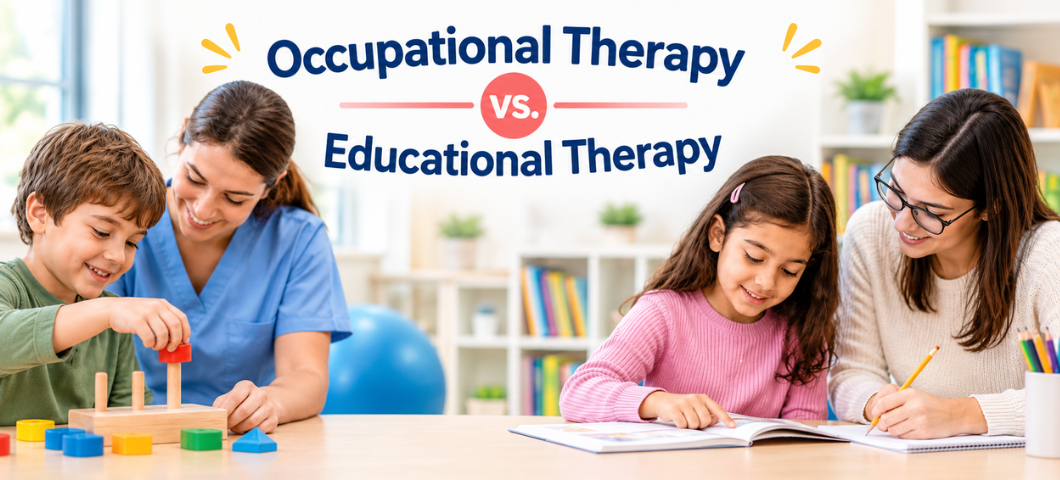
The main difference between occupational therapy vs. educational therapy is what they help a child with. Occupational therapy helps children improve everyday skills, such as holding a pencil, getting dressed, and managing sensory needs. Educational therapy helps children with schoolwork, including reading, writing, and math. In simple words, one helps children manage daily activities, while the other helps them learn better.
Occupational therapy, often called OT, is a licensed healthcare service. It helps with things like fine motor skills, handwriting, sensory needs, coordination, and self-care. Educational therapy focuses on school-based skills and the thinking behind them.
Both can help a struggling child, and some children benefit from each. Knowing the difference helps you choose the right support. Families looking for learning help often start with educational therapy in Vancouver, WA.
Not sure which type of support your child needs? Reach out to the Wonder Tree team to talk it through.
What Is Occupational Therapy?
Occupational therapy helps people build the skills they need for daily life. For children, that often means motor skills, sensory processing, coordination, and self-care tasks like dressing or using utensils. The word “occupation” here means a child’s everyday activities, including play and school tasks.
An occupational therapist is a licensed professional with a specialized degree. They assess how a child moves, senses, and manages daily tasks. Then they use activities and exercises to build those skills.
Much of OT looks like play, which helps children stay engaged. A therapist might use swings, putty, or obstacle courses with a clear goal behind each one. The fun is real, and so is the skill-building underneath it.
OT can help with handwriting, trouble with buttons or scissors, sensory sensitivities, and balance or coordination. It is often used for children with autism, developmental delays, or motor challenges. It is a hands-on, body-based kind of support.
OT also supports self-regulation, which is how a child manages energy and emotions. A therapist might use movement, deep pressure, or sensory tools to help a child settle. The aim is to help the child take part more fully in daily life.
What Are the Different Types of Occupational Therapy?
Occupational therapy has different areas of focus depending on a person's needs. Some common types include:
Pediatric OT: Helps children develop everyday skills, coordination, and independence.
Sensory Integration Therapy: Helps children manage and respond to sensory information.
Physical Rehabilitation OT: Helps people improve hand movements and physical skills after an injury or illness.
Mental Health OT: Supports people in managing daily activities and routines while dealing with mental health challenges.
Geriatric OT: Helps older adults maintain independence in everyday activities.
Each type focuses on helping people manage daily tasks and become more independent.
What Is Educational Therapy?
Educational therapy helps students who struggle to learn in the usual way. It targets the skills behind school success, such as reading, writing, math, organization, and study habits. The focus is on learning and the thinking that supports it.
An educational therapist works one-on-one to find out how a child learns, then builds a plan around their needs. Unlike a tutor, they address the underlying skills, not just tonight’s homework. Our post on educational therapy for kids and adults explains how it works.
This support often helps children with dyslexia, ADHD, or other learning differences. A good educational therapist near Vancouver, WA, whom families trust, will tie strategies to real schoolwork. The goal is lasting skills and more confidence.
Educational therapy also builds executive function, the brain’s planning and organizing system. That means helping a child start tasks, manage time, and keep track of their work. These skills matter across every subject.
What Is the Main Difference Between OT and Educational Therapy?
Both therapies help children develop important skills, but they focus on different areas. Here’s a simple table to help you understand the key differences between them
| Basis | Occupational Therapy (OT) | Educational Therapy |
|---|---|---|
| Main focus | Physical and daily life skills. | Learning and academic skills. |
| Skills | Writing, dressing, and coordination. | Reading, writing, spelling, and math. |
| Professional | Licensed occupational therapist. | Trained educational therapist. |
| Where | Clinics, schools, or therapy rooms. | Learning spaces or classrooms. |
| Approach | Movement and sensory activities. | Teaching and learning strategies. |
| Cost | May be covered by insurance. | Usually paid privately. |
| Main goal | Improve everyday independence. | Improve learning and confidence. |
Want help figuring out the right fit? Book a first appointment with Wonder Tree to get started.
Can a Child Need Both Occupational and Educational Therapy?
Yes, and many children do benefit from both. A child with autism might need OT for sensory and motor needs, plus educational therapy for reading and writing. The two can work side by side.
When a child struggles across several areas, a team approach often works best. Each professional handles their piece, and together they support the whole child. Good communication between them keeps the plan consistent.
Having both does not mean a child is worse off. It simply means their needs cross more than one area. A clear evaluation helps sort out which supports will help most.
It also helps to start with the most pressing need. If sensory overload is blocking everything, OT might come first. If reading is the main struggle, educational therapy may take the lead, with the other added later.
How Do You Know Which Type Your Child Needs?
The signs usually point one way or the other. If your child struggles with handwriting, coordination, sensory overload, or self-care, occupational therapy may help. If the struggle is mainly reading, writing, math, or focusing on schoolwork, educational therapy is often the better fit.
A thorough evaluation takes out the guesswork. Our post on the psychoeducational evaluation explains how testing reveals a child’s learning profile. It also helps to understand the difference between an educational and a psychological evaluation, since each answers different questions.
Sometimes a learning difference or attention issue is at the root. In those cases, ADHD and learning disability testing can bring clear answers. The right evaluation points you to the right kind of help.
When you are still unsure, start by talking with a professional who knows both fields. They can listen to what you are seeing and suggest a direction. You do not have to figure out the labels on your own.
How Do These Supports Fit With School?
Both OT and educational therapy can work alongside school support. Schools sometimes provide OT or learning help through a formal plan. Outside support can fill gaps the school cannot cover.
A clinical evaluation can also strengthen a child’s school plan. Our guide on accommodations and IEPs shows how these pieces fit together. Clear testing often opens the door to the right classroom support.
The goal is a steady net of support across home, school, and therapy. When everyone shares the same plan, a child makes smoother progress. Consistency is what helps new skills stick.
Keep your own notes on what helps and what does not. Sharing those observations with each provider keeps the plan sharp. You know your child better than anyone, and that insight is valuable.
Educational Therapy and Evaluation at Wonder Tree in Vancouver, WA
At Wonder Tree Developmental Psychology, located at 1603 Officers Row in Vancouver, WA, families can get clear evaluations and educational therapy for their children. The team helps you understand the whole child, then points to the right support.
When occupational therapy is needed, Wonder Tree can help families find the right provider while offering learning support and therapy in-house. Steady child therapy in Vancouver, WA, and autism testing in Vancouver, WA, round out the care, so children get a full picture of support.
Frequently Asked Questions
-
Occupational therapy helps children develop everyday skills, such as dressing, writing, and using their hands independently. Physical therapy focuses on improving movement, balance, strength, and coordination.
-
Occupational therapy focuses on helping children manage everyday activities, such as dressing, writing, eating, and playing. Regular therapy often focuses on emotional, mental, or behavioral challenges, depending on the type of therapy.
-
Both can touch handwriting, but from different angles. Occupational therapy works on the physical act of writing, while educational therapy supports the writing and organizing of ideas. Sometimes a child benefits from both.
-
A licensed occupational therapist provides OT, and a trained educational therapist provides educational therapy. Some clinics offer one, some the other, and some can refer you. It helps to ask what a provider offers.
-
There are several types of occupational therapy, depending on a person's needs. Common types include pediatric OT, physical rehabilitation OT, mental health OT, sensory integration therapy, and geriatric OT.