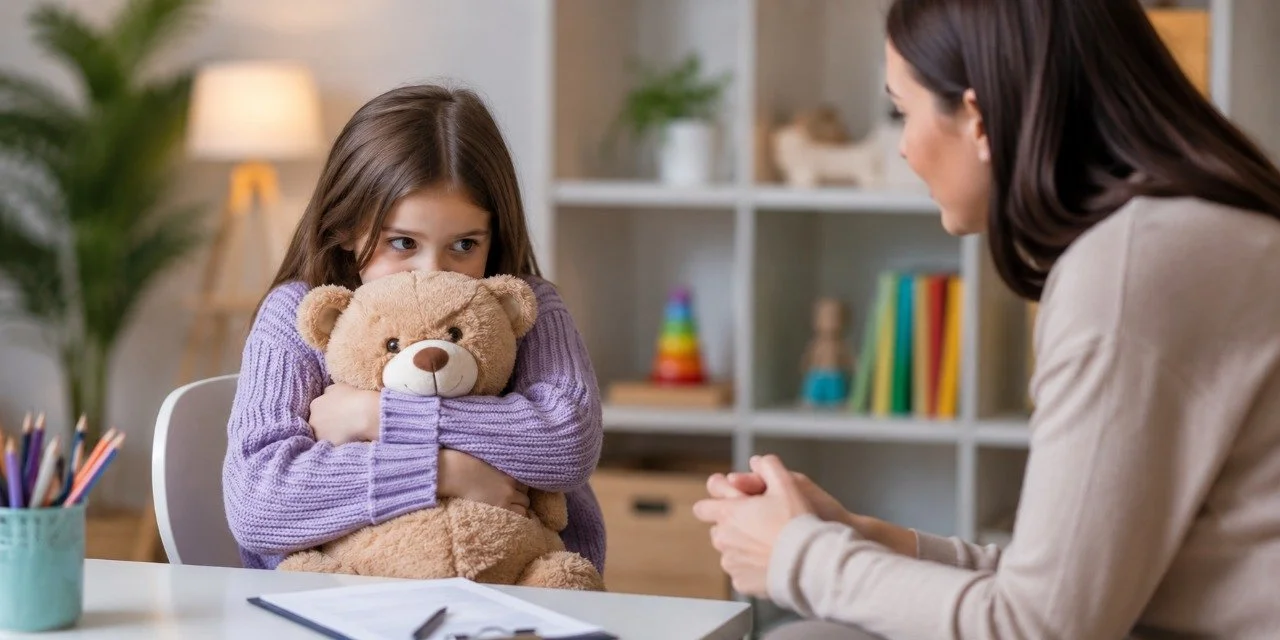
At home, your child never stops talking. They narrate everything, ask endless questions, joke with siblings, and chat through every meal. But the moment they step into a classroom, a birthday party, or any situation involving people outside their immediate comfort zone, something changes. The voice disappears. They freeze. They may nod or shake their head, gesture, or whisper to a trusted person, but they do not speak. And no amount of encouragement, waiting, or gentle prompting produces speech.
If this pattern sounds familiar, your child may have selective mutism, a condition that is frequently misunderstood as stubbornness, extreme shyness, or deliberate non-compliance, when in reality it is none of those things. Selective mutism is an anxiety disorder. The silence is not a choice. It is a neurological freeze response triggered by social anxiety so intense that the physical capacity for speech is genuinely impaired in specific contexts.
This guide explains what selective mutism is, how it differs from shyness and other conditions, what causes it, and, most importantly, what evidence-based treatment for selective mutism looks like and why early intervention is so critical. Speaking with a child psychologist near Vancouver WA, who understands selective mutism is an important first step toward helping your child find their voice.
What Is Selective Mutism?
Selective mutism is an anxiety disorder classified in the DSM-5 under anxiety disorders. It is characterized by a consistent failure to speak in specific social situations in which speaking is expected, most commonly in school and social settings outside the home, despite speaking normally in other settings, typically at home with family members.
The key diagnostic features are that the failure to speak is consistent across time and contexts; it is not just a bad day or adjustment period; it interferes significantly with educational achievement or social communication; and it has lasted at least one month after the first month of school entry. The silence is not caused by a lack of knowledge or comfort with the language being spoken, and it is not better explained by a communication disorder or autism spectrum disorder, though selective mutism can and does co-occur with both.
The word "selective" in the name refers to the situation-specific nature of the mutism, not to any deliberate choice the child is making about when to speak. This is one of the most important points for parents and educators to understand: selective mutism is not defiance. A child with selective mutism is not refusing to speak as a power move or to manipulate. They are physiologically unable to speak in the triggering context because their anxiety response has overwhelmed the neurological systems that support social speech.
Key Facts About Selective Mutism
Selective mutism affects approximately 0.5–1% of school-age children, making it rarer than many other anxiety conditions but more common than most people realize. It most commonly emerges between ages 2.7 and 4.1, making preschool and kindergarten the most frequent onset context. Without appropriate treatment, selective mutism can persist for years, and chronic educational and social impairment significantly increases risk for broader anxiety and depression in adolescence.
Source: Viana, Beidel & Rabian, Clinical Psychology Review, 2009.
Selective Mutism vs. Shyness: A Critical Distinction
Selective mutism is consistently misidentified as extreme shyness, and this misidentification has real consequences because the interventions that help shy children (gentle encouragement, patience, and time) do not help children with selective mutism and can sometimes make the condition worse.
Shyness is a personality trait, a tendency toward social inhibition and caution that exists on a continuum in the general population. Shy children may take longer to warm up to new social situations, speak more quietly or hesitantly with unfamiliar people, and prefer smaller social groups. But shy children do speak in social situations; they may just need more time and comfort to do so.
Children with selective mutism do not speak at all in triggering situations, regardless of the amount of time, encouragement, or relationship building available to them. The silence is not a warm-up period that will eventually resolve. It is the expression of a specific anxiety response that requires targeted clinical intervention to change.
The practical implication of this distinction is significant: a child with selective mutism who is placed in a classroom and simply given time to warm up will typically not warm up; the anxiety that prevents speech is not resolved by familiarity alone. Without targeted intervention, many children with untreated selective mutism remain mute in social settings for years, with progressively compounding educational and social consequences.
Your Child Has a Voice. Let's Help Them Find It.
With evidence-based therapy, parent coaching, and school collaboration, our clinicians help children with selective mutism build confidence and communicate comfortably in everyday situations.
What Causes Selective Mutism?
Selective mutism is not caused by trauma, abuse, a single frightening event, or deliberate parental influence. It is best understood as a convergence of several contributing factors:
Biological Anxiety Predisposition
The foundation of selective mutism is a biologically based tendency toward anxiety, particularly social anxiety. Children with selective mutism typically have nervous systems that are more reactive to social novelty and perceived social threat than those of their peers. This reactivity is often present from early infancy, manifesting as behavioral inhibition, the consistent tendency to freeze, cling, and withdraw in unfamiliar situations.
Genetic Factors
Selective mutism runs in families. Parents and close relatives of children with selective mutism have significantly elevated rates of social anxiety disorder, shyness, and behavioral inhibition. When a child with a biological predisposition to social anxiety encounters the social demands of school entry, a genuinely novel, evaluative social environment, the predisposition and the stressor interact to produce the selective mutism presentation.
Avoidance Reinforcement
Once selective mutism is established, it is maintained by negative reinforcement, the same mechanism that maintains school refusal. When a child with selective mutism is not expected to speak in a triggering situation, their anxiety decreases temporarily. This temporary relief reinforces the silence: not speaking is the strategy that reduces the unbearable anxiety. Over time, the association between silence and relief becomes increasingly entrenched, and the situations in which the child can speak may narrow progressively.
Language and Communication Differences
Some children with selective mutism have underlying language processing differences, bilingual language environments, or communication differences, including mild autism features, that interact with anxiety to produce the selective mutism presentation. In bilingual children, selective mutism may occur specifically in the second language, a pattern sometimes called "language-specific selective mutism," though it can also occur in both languages simultaneously.
How Selective Mutism Is Diagnosed
Selective mutism is diagnosed by a licensed mental health professional, typically a child psychologist or psychiatrist, through a comprehensive assessment that includes a clinical interview with parents, observation of the child in different contexts, and standardized anxiety measures. The assessment distinguishes selective mutism from other conditions that may produce similar presentations, including autism spectrum disorder, language disorders, intellectual disability, and other anxiety conditions.
An important feature of selective mutism assessment is gathering information across multiple settings because the child who presents as silent and frozen in a clinical office may be a very different child at home. Recordings of the child speaking at home, a detailed parent report of the child's communication at home versus in social settings, and, sometimes, a school observation are all part of a thorough assessment. A child psychologist near Vancouver, WA, who understands selective mutism will know exactly what information is needed to make an accurate diagnosis and distinguish it from other conditions.
Effective Treatment Approaches For Selective Mutism
Selective mutism is treatable, and with appropriate, early intervention, many children achieve full speech in all settings. The key is that the treatment must specifically target the anxiety and avoidance mechanisms that maintain the silence, not simply create opportunities for the child to speak and wait for them to take advantage of those opportunities.
Behaviorally Based Exposure Therapy
The most evidence-supported treatment for selective mutism is exposure-based therapy, the same foundational approach used for other anxiety disorders, adapted specifically for selective mutism. Rather than exposing the child to direct speech, the therapist uses a technique called stimulus fading and shaping to gradually increase the child's comfort with speaking in a stepwise, systematic way.
Stimulus fading begins by establishing a context in which the child speaks comfortably, typically with one trusted family member, and then very gradually introducing new elements: a new person slightly outside the room, then inside the room, then closer. The child speaks to their parent while the therapist is present at increasing proximity, then transfers that speaking gradually to include the therapist. Each step is held until the child is comfortable before moving to the next. Progress is genuinely gradual, measured in small victories that build toward larger ones.
Parent and Family Involvement
Parents play an essential role in selective mutism treatment for two reasons. First, they are the adults with whom the child can speak freely, making them the anchor for the exposure work. Second, many well-meaning parental responses to selective mutism inadvertently maintain it: speaking for the child, rescuing them from speaking demands, or over-accommodating their silence. Family therapy in Vancouver, WA, and parent coaching help families develop the specific responses that support rather than reinforce the avoidance, maintaining warm, low-pressure communication without removing the gentle expectation of eventual speech.
School-Based Intervention
Because selective mutism is most prominent in school settings, school involvement is essential for effective treatment. A well-designed school intervention plan includes identifying a designated safe adult the child works with toward speaking; establishing specific graduated speech goals for the school environment; educating teachers about what to do and not do (never putting the child on the spot, not drawing attention to their silence, and not allowing other children to speak for them); and consistent implementation of the exposure-based approach across the school day.
The Role of Speech-Language Therapy
Speech-language pathologists (SLPs) with specific training in selective mutism are valuable members of the treatment team, particularly for younger children and those who have developed compensatory communication patterns (whispering, gesturing, using intermediaries) that need to be faded alongside the introduction of speech. SLP involvement is most effective when coordinated with the psychologist-led exposure framework rather than implemented as a standalone intervention.
Medication in Some Cases
For children with severe selective mutism or those who have not responded to behavioral intervention alone, medication, typically an SSRI such as fluoxetine, is sometimes considered an adjunct to therapy. Medication does not treat selective mutism directly but can reduce the baseline anxiety level enough that the exposure work becomes more accessible. Medication decisions should always involve the child's pediatrician or psychiatrist.
What Parents Should Avoid Doing
Understanding what not to do is as important as understanding what to do. The following common responses maintain or worsen selective mutism, even when they feel compassionate in the moment:
Pressuring the child to speak:
Direct demands, countdowns, or persistent prompting increase anxiety and strengthen the silence. Pressure backfires.
Speaking for the child or answering on their behalf:
This removes the need to speak and reinforces that others will manage social situations for them. Allow pauses. Maintain gentle expectations.
Expressing visible frustration or disappointment:
Emotional reactions to the silence increase the child's anxiety and shame, making speaking less, rather than more, likely.
Reassuring the child that they do not need to speak:
While this feels kind, it strengthens avoidance by communicating that the anxiety-driven escape is acceptable.
Waiting without intervention:
Selective mutism does not resolve on its own with time. Without targeted treatment, children who are simply waited out typically remain mute in social settings throughout their school years.
The guide to therapy for children with anxiety provides additional context on how anxiety-based conditions are treated in children, including the graduated exposure principles that underpin selective mutism treatment.
Frequently Asked Questions
-
Whispering, gesturing, nodding, and using intermediaries are all very common in selective mutism; they are strategies the child uses to communicate while avoiding full speech. The presence of some communication does not rule out selective mutism. What matters is whether the child can speak normally in some settings but not in others, and whether the pattern has persisted long enough to significantly affect their social and educational functioning. A clinical assessment will clarify whether what you are seeing fits the selective mutism profile.
-
Occasionally, mild cases resolve without formal treatment, particularly in very young children during the first year of school. However, for most children, selective mutism does not resolve on its own, and the longer it persists without treatment, the more entrenched the avoidance becomes and the harder it is to treat. Early intervention is the single most important factor in treatment outcome. If a child has been mute in social settings for more than three months, waiting is not recommended.
-
Selective mutism and autism are separate diagnoses that can and do co-occur. Autistic children may experience significant social anxiety and communication challenges that overlap with selective mutism features. When both are present, treatment must address both the autism-related communication differences and the anxiety-driven avoidance simultaneously, which requires a clinician who understands both conditions. Understanding the full range of what does a child psychologist do in complex presentations like this helps families know what to look for in a specialist.
Your Child Has A Voice. Therapy Helps Them Use It
At Wonder Tree Developmental Psychology, we understand selective mutism, its anxiety foundation, its reinforcement mechanisms, and the specific evidence-based approaches that produce real, lasting change. Our child therapy in Vancouver, WA, includes clinicians trained in exposure-based treatment for selective mutism and related anxiety conditions, with the school collaboration and parent coaching components that treatment requires.