How Does Social Media Affect Teen Mental Health?
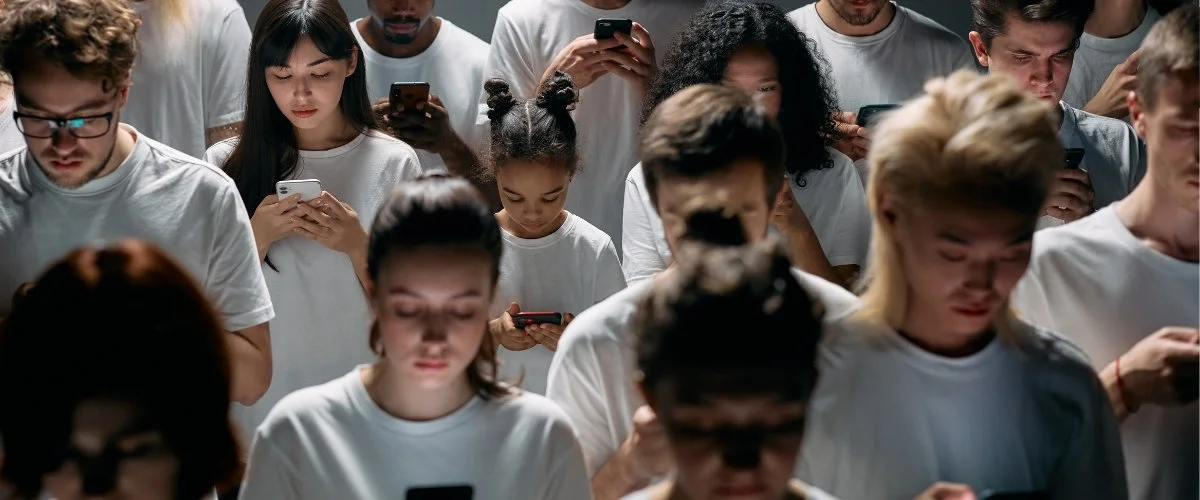
Most parents of teenagers have had the argument: the phone is always present, sleep is getting shorter, moods seem darker after extended scrolling, and yet any suggestion that social media might be part of the problem is met with fierce resistance. Parents are left wondering whether their concern is justified by evidence or whether they are simply struggling to accept how their teenager's generation lives.
The research on social media effects on teen mental health has expanded dramatically over the past decade, and the picture it paints is more nuanced than either extreme position; neither "social media is destroying our children" nor "there's nothing to worry about" accurately captures what the evidence shows. What research consistently demonstrates is that the relationship between social media and adolescent mental health is real, measurable, and most harmful for specific types of use and specific groups of teenagers.
This guide explains what the research actually says, identifies the mechanisms through which social media harms teen mental health, describes which teenagers are most vulnerable, and gives parents practical, evidence-based guidance on how to navigate this issue constructively, including when to seek support through adolescent therapy Vancouver WA.
What Does The Research Actually Say?
The most important scientific contribution to this debate in recent years comes from a landmark 2019 study by Amy Orben and Andrew Przybylski, published in Nature Human Behaviour. Their large-scale analysis found that the effect size of social media on adolescent wellbeing, while statistically significant, is comparable to the effect of wearing glasses or eating potatoes. This does not mean social media has no effect. It means the relationship is complex, modest on average, and highly dependent on how social media is used rather than simply how much.
More recent research, including the work of social psychologist Jonathan Haidt, whose 2023 book synthesized data across multiple countries, has strengthened the evidence for a causal relationship between social media use and declining adolescent mental health, particularly in girls, and particularly from around 2012 onward, the year smartphone adoption reached majority levels among teenagers.
The critical variable that most research now agrees on is the distinction between passive consumption, scrolling through content, watching others' lives, comparing oneself to curated images, and active connection, messaging friends, collaborating on content, and using social media to maintain existing relationships. Passive consumption is consistently associated with worse mental health outcomes. Active connection is largely neutral or mildly positive. Most teenage social media use is predominantly passive.
Important Research Findings
Girls are disproportionately affected. Research consistently shows stronger negative associations between social media use and mental health in teenage girls compared to boys, likely due to greater social comparison sensitivity and higher rates of appearance-focused platform use.
Heavy social media use (3+ hours daily) is associated with significantly higher rates of depression, anxiety, and sleep disturbance in adolescents. The association is strongest for the Instagram and TikTok platforms, built around visual content and algorithmic feeds designed to maximize engagement rather than wellbeing.
Source: Twenge et al., Clinical Psychological Science, 2018; Haidt & Allen, Perspectives on Psychological Science, 2020.
How Social Media Harms Teen Mental Health: The Key Mechanisms
Understanding the specific pathways through which social media affects adolescent mental health helps parents respond to the problem with precision rather than blanket restriction.
Social Comparison and Body Image
Adolescence is already a period of intense identity formation and social self-consciousness. Social media supercharges this by providing a constant stream of curated, filtered, idealized images of peers, influencers, and public figures that teenagers implicitly compare themselves against. The comparison is structurally unfair: real teenagers compare their authentic selves to others' carefully constructed digital presentations, yet this cognitive awareness does not mitigate the emotional impact. Social comparison is one of the most reliably documented mechanisms connecting social media use to depression and anxiety in teenage girls, with appearance-focused platforms like Instagram producing the most consistent harm.
Cyberbullying and Online Social Exclusion
Bullying and social exclusion have always been features of adolescent social life, but social media has transformed both the scale and the inescapability of these experiences. Cyberbullying follows teenagers home across every device, can involve mass public humiliation, and leaves permanent digital records. Social exclusion that previously would have remained invisible, being left out of a gathering, is now actively visible on social media, with teenagers able to see in real time that they were not included. The psychological impact of exclusion made visible is substantially more damaging than exclusion alone.
Sleep Disruption
The relationship between social media use and sleep disruption in teenagers is one of the most consistently documented in the literature. Teenagers who use their phones in bed delay sleep onset, experience frequent nighttime notifications that fragment sleep, and often use social media during the night when they cannot sleep, creating a vicious cycle. Sleep deprivation is itself a direct cause of depression, anxiety, emotional dysregulation, and impaired cognitive performance. Many of the mental health effects attributed to social media may be partly or substantially mediated by the sleep disruption social media causes.
Displacement of Offline Activities
Time spent on social media is time not spent on activities that are consistently associated with positive mental health, such as face-to-face interaction, physical activity, creative pursuits, unstructured outdoor time, adequate sleep, and family connection. The issue is not only what social media does to teenagers directly, but also what it displaces. A teenager who spends four hours daily scrolling is not spending those four hours doing things that build resilience, relationship depth, and genuine wellbeing.
Algorithmic Amplification of Distress
Social media algorithms are designed to maximize engagement, and negative emotional content, including content related to self-harm, eating disorders, extreme political views, and crisis, consistently generates more engagement than neutral content. Teenagers who show any interest in distressing content are algorithmically served more of it. A teenager who is already struggling with depression may find their feed increasingly populated with content that validates and amplifies the depression rather than offering relief or perspective.
The Attention Economy and Executive Functioning
Social media platforms are explicitly designed to be addictive, using variable reward schedules, infinite scroll, notification systems, and social validation metrics (likes, followers) to capture and hold attention. For teenagers whose prefrontal cortex is still developing, and especially for teenagers with ADHD whose attention regulation is already compromised, the competitive pull of a platform designed by teams of engineers to maximize engagement presents a fundamentally unfair contest between the developing brain and the attention economy.
Which Teenagers Are Most Vulnerable?
Social media does not affect all teenagers equally. The following groups show consistently stronger negative associations between social media use and mental health outcomes:
Teenage girls:
Particularly those who use appearance-focused, comparison-heavy platforms. Girls show greater sensitivity to social comparison and are more likely to use social media in passive, comparison-oriented ways.
Teenagers with pre-existing anxiety or depression:
Social media amplifies rather than creates vulnerability. A teenager who is already struggling is more likely to use social media in ways that worsen their state, seeking reassurance, comparing unfavourably, and exposure to triggering content.
Teenagers with ADHD:
The attentional demands and reward structures of social media platforms are particularly mismatched with the ADHD brain. Teenagers with ADHD often struggle to moderate their own use and are more susceptible to the negative emotional consequences of extended passive consumption.
Socially isolated or bullied teenagers:
Social media does not solve underlying social difficulties; it often amplifies them. A teenager who is struggling socially offline is not protected by social media connections; they are more likely to be further exposed to rejection and exclusion.
Teenagers with low self-esteem:
Social comparison is most harmful for teenagers who already hold negative self-evaluations. Social media provides an endless supply of comparison targets that tend to confirm rather than challenge low self-esteem.
What Parents Can Realistically Do
Complete social media bans for teenagers are rarely sustainable or effective, particularly for older teenagers, for whom social media is a genuine part of peer culture. What does work is a combination of structural limits, ongoing conversation, and relationship investment that gives teenagers both the boundaries and the tools to navigate their digital environment more safely.
Establish Device-Free Zones and Times
The most evidence-supported structural intervention is simple: no phones in bedrooms at night. This single change addresses the sleep-disruption mechanism underlying much of social media's mental health impact. Device charging outside the bedroom, consistent family device-free times (meals, the hour before bed), and no-phone rules during face-to-face family time are all accessible, research-supported starting points that do not require a full smartphone ban.
Discuss Rather Than Just Restrict
Teenagers who understand why limits exist, who have had genuine conversations about social comparison, algorithmic design, sleep and mental health, and the difference between connection and passive consumption, are far more likely to internalize healthy use habits than those who are simply told to put the phone down. These conversations are most effective when they are curious rather than lecturing, when parents share their own experience honestly, and when teenagers feel like participants rather than subjects of policy.
Monitor Mood Changes Alongside Use
Rather than monitoring the Quantity of social media use in isolation, pay attention to how your teenager feels after extended use. Consistently increased irritability, withdrawal, or distress following social media use is a more meaningful signal than total time on the platform. Opening a conversation about the connection, "I notice you often seem down after spending a lot of time on Instagram. Have you noticed that?" is more effective than a platform ban and more likely to build the teenager's self-awareness.
Strengthen Offline Relationships and Activities
The most robust protective factor against the mental health harms of social media is a rich offline life, strong family connection, meaningful peer friendships built on face-to-face interaction, physical activity, creative engagement, and a sense of belonging and purpose outside digital spaces. These are not alternatives to managing social media use; they are the environment in which managed social media use is possible.
Know When to Seek Professional Support
When social media use has become compulsive, when mental health deterioration is significant, or when a teenager's digital experiences have included trauma (cyberbullying, unwanted content, or exploitation), professional support may be warranted. Child therapy in Vancouver, WA, and adolescent-specialized therapy at Wonder Tree help teenagers develop the self-awareness, emotional regulation skills, and media literacy that protect against the mental health harms of their digital environment.
For families navigating these concerns together, family therapy Vancouver WA provides structured support for developing household norms around technology that the whole family can sustain, reducing conflict and building shared understanding of why these boundaries matter.
Frequently Asked Questions
-
Most major platforms have a minimum age of 13 under COPPA (Children's Online Privacy Protection Act). The American Psychological Association recommends that children under 14 have little to no unsupervised social media use. That said, the "right age" depends substantially on the individual teenager's maturity, self-regulation skills, and mental health context. Rather than age as the primary criterion, consider the teenager's specific capacity to manage the emotional and attentional demands of social media independently.
-
This is a judgment call that depends on your teenager's age, maturity, and current mental health status. For younger teenagers or those showing signs of distress, greater oversight is both appropriate and research-supported. For older, more mature teenagers, covert monitoring often damages the trust that is itself a protective factor for adolescent mental health. The most effective approach if monitoring is indicated is transparent monitoring that the teenager is aware of, framed as a temporary safety measure rather than a permanent surveillance arrangement.
-
There is genuine truth to this concern for older teenagers especially, social media is now a space where real peer relationships are maintained, and complete exclusion carries real social costs. The goal is not elimination but management. Structured, time-limited, and increasingly self-directed use of social media is more realistic and more effective than complete bans for most teenagers. Knowing the 7 signs your child should see a therapist can help you determine whether professional support is needed in addition to family-level management.
-
There is genuine truth to this concern for older teenagers especially, social media is now a space where real peer relationships are maintained, and complete exclusion carries real social costs. The goal is not elimination but management. Structured, time-limited, and increasingly self-directed use of social media is more realistic and more effective than complete bans for most teenagers. Knowing the 7 signs your child should see a therapist can help you determine whether professional support is needed in addition to family-level management.
Your Teenager's Mental Health Is Worth Taking Seriously
At Wonder Tree Developmental Psychology, our adolescent therapists understand both the genuine risks and the complex realities of teenage life in a digital age. We provide adolescent therapy that builds the emotional regulation skills, self-awareness, and media literacy that help teenagers navigate their digital environment with greater resilience, alongside parent consultation that helps families establish the structures and conversations that make a real difference at home. If your teenager's relationship with social media is affecting their mental health, sleep, relationships, or daily functioning, that is worth addressing